A pet’s mouth can reveal more about their health than you might expect. Yet dental problems often develop quietly. Dogs and cats may continue eating and behaving normally even when plaque, tartar, gum irritation, or oral discomfort is developing. Learning to recognize subtle changes can help you address dental concerns before they become more serious.
For pet owners in Palmetto, FL, routine attention to oral health can be an important part of keeping dogs and cats comfortable throughout their lives. Checking your pet’s teeth at home and scheduling regular veterinary examinations can make it easier to notice changes that may otherwise go unnoticed.
Pet dental service can provide professional evaluation and care when a pet develops dental disease or other oral health concerns. Veterinary dental care is not simply about keeping teeth clean; it can also help identify problems involving the gums, teeth, and other structures inside the mouth.
What Are the Early Signs of Dental Disease in Pets?
The earliest signs of dental disease can include bad breath, visible tartar, red or swollen gums, changes in chewing habits, or reluctance to have the mouth touched. Some pets may show very subtle changes, making routine observation particularly useful.
Dental disease often begins with plaque, a sticky film of bacteria that forms on the teeth. If plaque is not adequately removed, it can harden into tartar. Over time, bacteria and inflammation can affect the gums and supporting structures around the teeth.
1. Persistent Bad Breath
A little pet breath may seem normal, but persistent or noticeably unpleasant breath should not simply be dismissed as part of having a dog or cat.
Bad breath can be associated with bacterial buildup and dental disease. It may also have other possible causes, so a veterinary examination can help determine what is contributing to the odor.
2. Red, Swollen, or Bleeding Gums
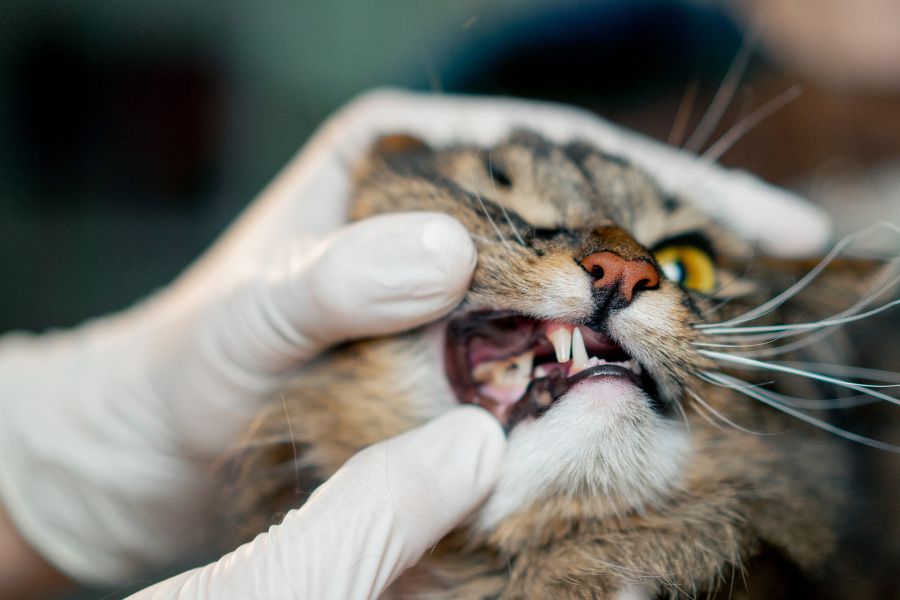
Healthy gums generally have a normal, consistent appearance. Redness, swelling, or bleeding around the teeth can indicate irritation or inflammation.
If you notice blood on a toy, food bowl, or during gentle mouth handling, mention it to your veterinarian. Avoid trying to scrape tartar off your pet’s teeth at home, as this could cause injury.
3. Yellow or Brown Tartar Buildup
Visible yellow, brown, or hardened material along the teeth may be tartar. Tartar can accumulate near the gumline and provide a surface where additional plaque can develop.
Brushing may help control plaque before it hardens, but established tartar generally requires professional veterinary attention rather than home scraping.
4. Changes in Eating or Chewing
A pet with oral discomfort may begin chewing differently, eating more slowly, dropping food, preferring softer foods, or avoiding certain treats. Some animals may also chew on one side of the mouth.
These changes can be easy to overlook because many pets will continue eating despite dental discomfort. A noticeable change in how your pet eats is worth discussing with a veterinarian.
5. Excessive Drooling or Pawing at the Mouth
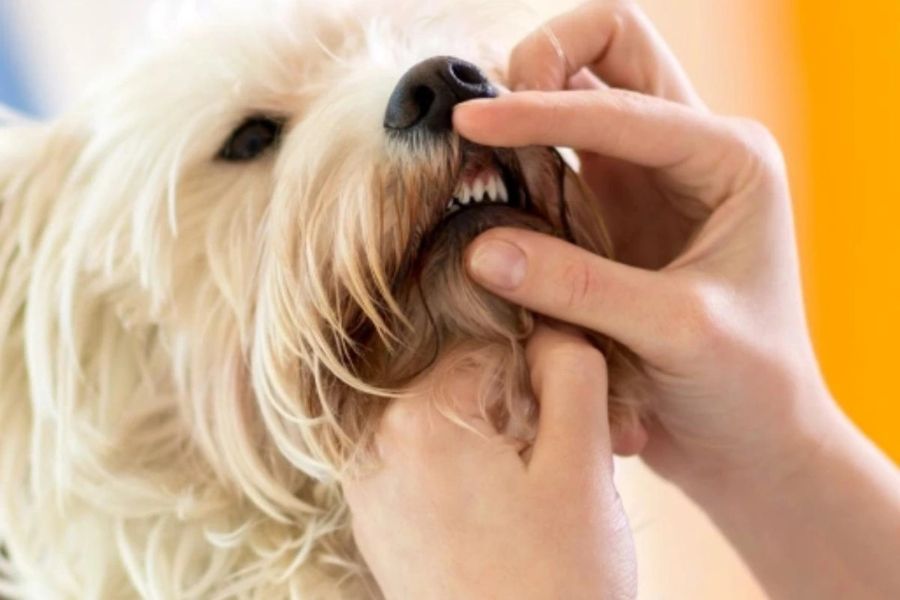
Increased drooling, repeated licking, or pawing at the face can sometimes be associated with oral discomfort. Some pets may also resist having their head or mouth touched.
These behaviors do not automatically mean your pet has dental disease, but they are changes that deserve attention, particularly when they occur alongside bad breath or eating difficulties.
Why Is Dental Care Important for Dogs and Cats?
Dental disease can progress beyond visible tartar and affect the tissues supporting the teeth. Advanced oral problems may cause significant discomfort and can make eating or normal daily activities more difficult.
Regular veterinary dental examinations allow your veterinarian to assess your pet’s mouth and determine whether professional cleaning, additional diagnostics, or other treatment may be appropriate.
Dental care should also be considered alongside your pet’s overall wellness. Age, breed, individual anatomy, diet, previous dental problems, and home care habits can all influence oral health.
How Can You Help Prevent Dental Problems?
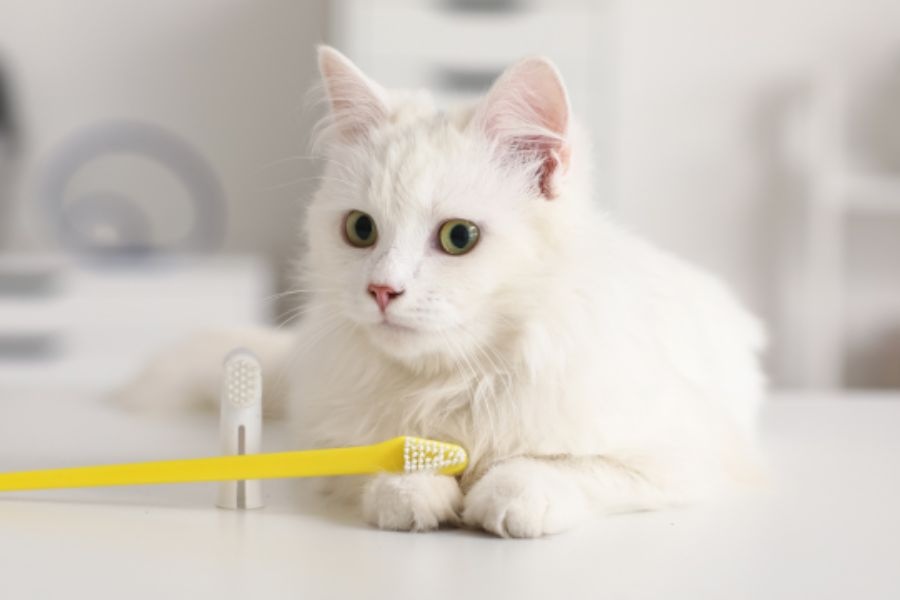
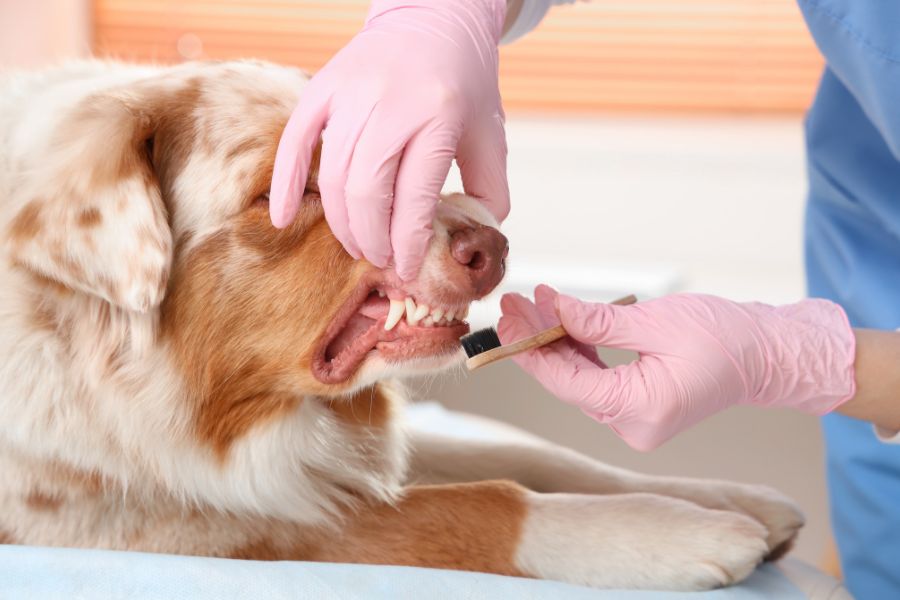
Consistent home care can help reduce plaque accumulation. Depending on your pet’s needs, your veterinarian may recommend tooth brushing, veterinary-approved dental products, or other oral hygiene strategies.
Introduce brushing gradually if your pet is not accustomed to it. Never force your pet’s mouth open or continue if they become distressed. Your veterinary team can show you appropriate techniques and help determine which products are suitable.
Professional dental examinations remain important even when you provide regular home care. Some oral problems may develop below the gumline and cannot be identified through a quick look at the visible teeth.
When Should You Contact a Veterinarian?
Schedule a veterinary examination if your pet develops persistent bad breath, bleeding or swollen gums, visible tartar, difficulty chewing, excessive drooling, facial swelling, loose or damaged teeth, or a noticeable change in eating behavior.
Sudden facial swelling, significant bleeding, severe discomfort, or an inability to eat should receive prompt veterinary attention.
Even if your pet seems comfortable, routine dental examinations can help identify oral health concerns before they become more noticeable.
Dental disease is not always obvious, especially during its early stages. Paying attention to your pet’s breath, gums, teeth, eating habits, and behavior can help you recognize changes that deserve professional attention. Regular home care and veterinary dental examinations can work together to support better oral health.
If you have noticed changes in your pet’s mouth or want to establish a preventive dental care routine, Watson’s Friends Animal Hospital can help assess your companion’s individual needs. Schedule an appointment to discuss your pet’s dental health and learn what care may be appropriate.
Frequently Asked Questions
Q1. What is the first sign of dental disease in dogs and cats?
Ans: Persistent bad breath is often one of the first noticeable signs, although red gums, tartar buildup, chewing changes, or increased drooling may also occur.
Q2. Can pets have dental disease even if they are still eating normally?
Ans: Yes. Pets can continue eating despite oral discomfort, so normal appetite does not necessarily mean their mouth is healthy. Regular dental examinations are still important.
Q3. Can I remove tartar from my pet’s teeth at home?
Ans: Do not scrape hardened tartar from your pet’s teeth yourself. Improper tools or techniques can injure the gums or damage the tooth surface. Ask your veterinarian about appropriate dental care instead.
Q4. Does Watson’s Friends Animal Hospital provide pet dental care?
Ans: Watson’s Friends Animal Hospital can evaluate your pet’s oral health and recommend appropriate dental care based on their individual needs and overall health.
Q5. When should I schedule a dental examination at Watson’s Friends Animal Hospital?
Ans: Consider scheduling an examination if you notice bad breath, tartar, red gums, chewing changes, drooling, or other signs of possible oral discomfort. Routine examinations can also support preventive care.